

Technology portfolio
Seven lines, each built on a specific mechanism.
A fertiliser works or fails for reasons that can be written down. Every ZENITH line exists because a particular mechanism in the soil or in the plant needed solving — and each one is formulated, declared and measured against that mechanism rather than against a price point.
Why seven lines and not one catalogue
Soil pH alone decides which nutrients a crop can reach. It governs whether iron is available or locked, whether phosphate stays in solution or binds to calcium, whether molybdenum is sufficient or absent.
No single formulation answers that. A product built for an acid sand is the wrong product for a calcareous loam, and a chelate that performs at pH 6 releases its metal at pH 8. Rather than sell one range and let the grower find the limits, we separate the portfolio by the mechanism each line addresses, and publish the analytical method behind every declaration.
The chart below is the reason. Read the lime bands on the right: above pH 7.2 the micronutrients narrow to almost nothing while the macronutrients continue. That collapse is the origin of most of the deficiency problems our customers bring us.

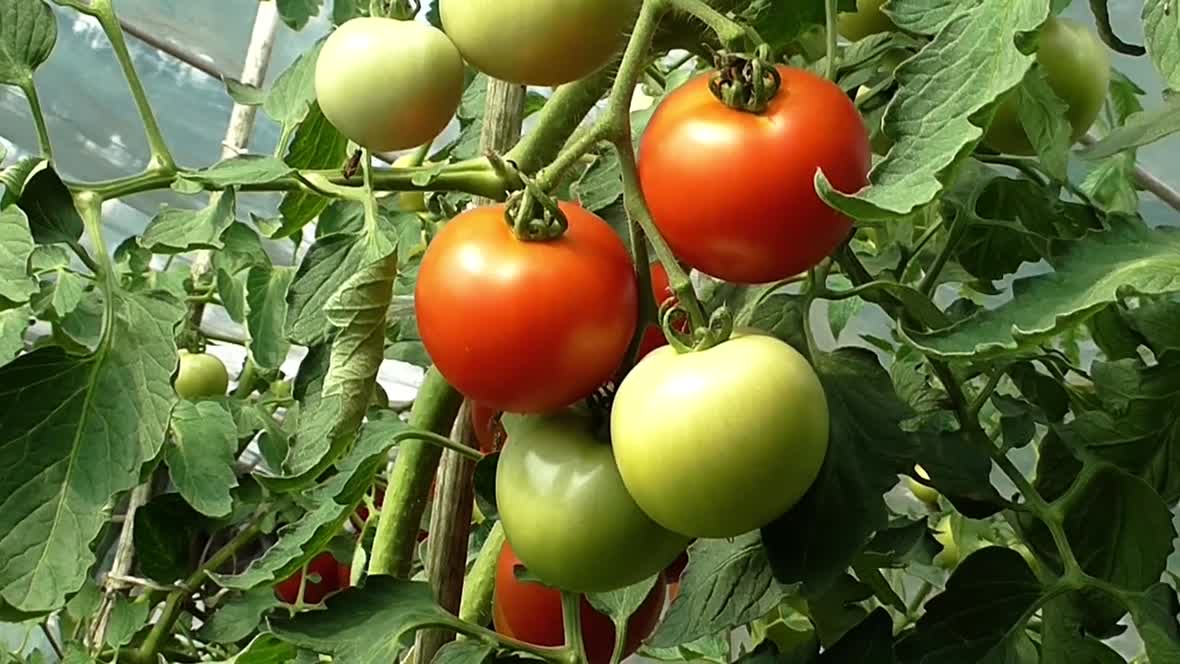
Formulations are tested against untreated controls and against the stress they are designed for before a claim reaches a label.
Maxi Feed Line
NPK + TE, 100 % water soluble
Built from the raw material up, then made to your formula
Every grade is fully water soluble and carries a complete trace-element package. The performance comes from the raw materials rather than the recipe: we buy on purity, not on price, so the prill collapses into free hydrated ions and leaves nothing behind to block an emitter or foul a filter. Grades are tailor-made — send us the crop, the water analysis and the growth stage, and the formulation is built around them rather than picked from a shelf.
In this lineMAXI-FEED 20-20-20 · 10-10-40 · 3-37-37 · 15-15-15 · 12-12-36 · 24-10-10+2MgO · custom grades on request

Greenest Green Line
Mineral nutrition and biology in a single formulation
Seven active groups engineered into one water-soluble product
NPK and trace elements, amino acids, fulvic acid, seaweed extract, chitosan and deep-sea fish protein — combined in one soluble formulation. Each component answers a different limitation: the minerals feed, the amino acids and fish protein supply nitrogen in a form the plant can use without reduction, fulvic acid carries the metals across the membrane, seaweed and chitosan prime the plant's own defence and stress response. Holding all seven stable in one product is the formulation problem this line was built to solve.
In this lineSoluble NPK + TE with amino acids, fulvic acid, seaweed, chitosan and deep-sea fish protein

Micronutrient Line
EDTA and DTPA chelates for foliar precision
Match the chelating agent to the element and to the water
A trace element only works if it is still chelated when it reaches the leaf. We offer a wide range of single elements and mixtures chelated with EDTA and DTPA, selected so the complex stays intact through the tank, the spray line and the cuticle. The agent is chosen for the element and the water it will be mixed into — and it is named on every label, because a chelate you cannot identify is a chelate you cannot evaluate.
In this lineZENITH MICRO-MIX · ZENITH-ZN15 · single-element EDTA and DTPA chelates of Fe, Mn, Zn and Cu

Ferro Chelate Line
Iron, and only iron
A dedicated line for the nutrient that fails most often
Iron deserves its own line because it fails more often than any other element and for a reason that is entirely chemical. Above pH 7 the ferric ion becomes an insoluble hydroxide, and EDTA and DTPA chelates let go before the root can reach it. EDDHA binds iron at six points and holds it in solution to pH 10. In the ortho-ortho isomer — the fraction that actually does the work, and the fraction that costs money — we declare the figure separately instead of hiding it inside a total.
In this lineZENITH FERRO PRIME — Fe-EDDHA 6.0 %, of which 5.0 % ortho-ortho · further iron grades in development

Specialty Nutrients & Biostimulants
Biostimulants and soil correctors
Separate the fractions, then publish which one you sell
Humic material is not one substance. Humic acid is large and slow and works on soil structure; fulvic acid is small and mobile and enters the plant; amino acids and peptides are taken up almost at once. Most suppliers quote a single combined number, because separating the fractions is difficult and the fulvic figure is usually the disappointing one. We fractionate to ISO 19822:2018 and publish every fraction on its own line — alongside soil correctors for salinity, pH and structure.
In this lineHUMISUN PLUS · HUMISUN · ZENITH BLACKJAK · ALGAESUN · CALISTA · soil correctors

Liquid Specialty Plant Nutrition
The most efficient route into the plant
Delivery is the variable, not concentration
A leaf is built to keep water out, and a root zone dilutes everything that reaches it. Efficiency in a liquid fertiliser is therefore a question of delivery: droplet size, surface tension, the pH of the spray solution and the stability of the complex in the tank all decide how much of what you applied is actually taken up. This line is formulated around that crossing, for foliar and fertigation alike.
In this lineLiquid humic, amino acid and micronutrient formulations for foliar and fertigation use

Climate-Smart Nutrition Line
Developed through a European research network
One of the first Climate-Smart Nutrient Centers in Europe
Heat and water deficit close stomata, and a closed stoma stops assimilation no matter how well fed the crop is. This line is developed around osmotic balance and antioxidant capacity — holding turgor, protecting the photosynthetic apparatus and keeping uptake running through the weeks when yield is actually decided. The work is carried out through our Climate-Smart Nutrient Center, in collaboration with universities in Germany, Italy, Spain, the Netherlands and Canada.
In this lineProgrammes developed with partner universities in Germany, Italy, Spain, the Netherlands and Canada

The Climate-Smart Nutrient Center
One of the first Climate-Smart Nutrient Centers in Europe, run as a research network rather than an in-house laboratory. Formulations for the seventh line are designed, trialled and challenged with partner universities across five countries, so the agronomy behind a product has been tested by people with no commercial interest in the result.
The Center is also where our Academy programmes originate: the same work that produces a formulation produces the training that goes with it.

Behind every declaration
A technology claim is only worth the measurement behind it. Ours are made in our own laboratory, produced on our own line, and tested in the field before they reach a label.

Every batch analysed before release. Humic fractions to ISO 19822:2018, chelated metal by the declared method, contaminants against Regulation (EU) 2019/1009.
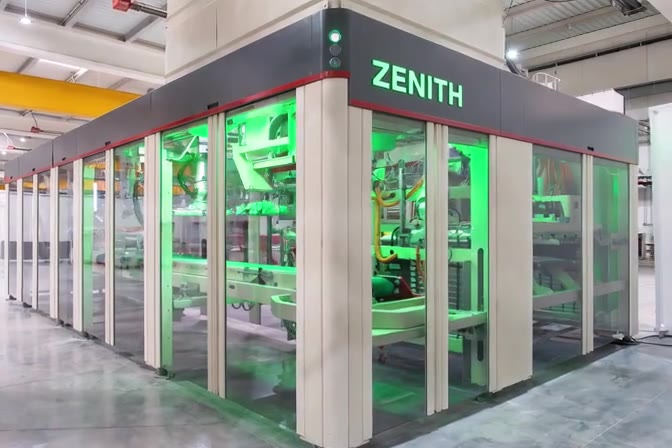
Particle engineering and spray agglomeration under our own control, so dissolution behaviour and dust-free handling are designed in rather than hoped for.

Rates and programmes are built from soil and tissue analysis, with the agronomist in the crop rather than in a catalogue.

Every formulation has to work for a grower on a working schedule, with the water and the machinery they already have.
Tell us the soil, not the product code.
Send a soil analysis and the crop. We will tell you which line applies, which mechanism is limiting yield, and whether we are the right supplier for it.